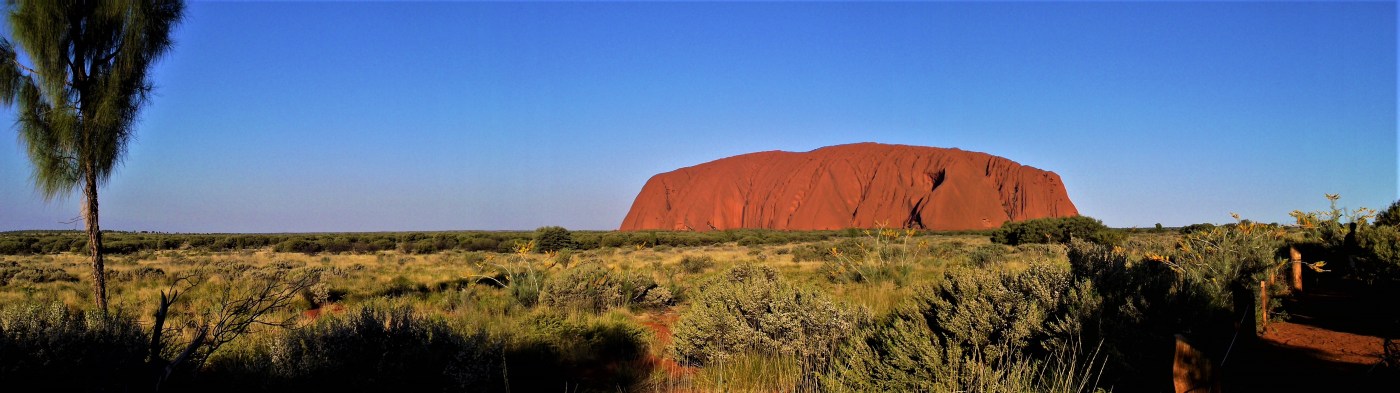
To be honest, we had never really wanted to go to Ayers Rock, in the middle of Australia. All our lives it has been a big red rock on a postcard, typical Aussie and a bit kitsch. It wasn’t until we discussed going on a road trip to the red centre and a desire to see the West MacDonnell Ranges, just out of Alice Springs, that the subject was mentioned. Well actually the notion of seeing the rock only took shape when we passed the sign to it on the corner of the Stuart Highway and Lasseter Highway at Erldunda, approximately 200 klm south from Alice Springs. It was only about 250 klm west to Ayers Rock ( now Uluru ), so decided that if we were this close that we should probably go and have a look at what all the fuss has been about.


Due to a very wet winter, the red earth of the outback was very hard to find, but the abundance of wildflowers and green tussocks of grass were stunning and added a mosaic of colour to the landscape.
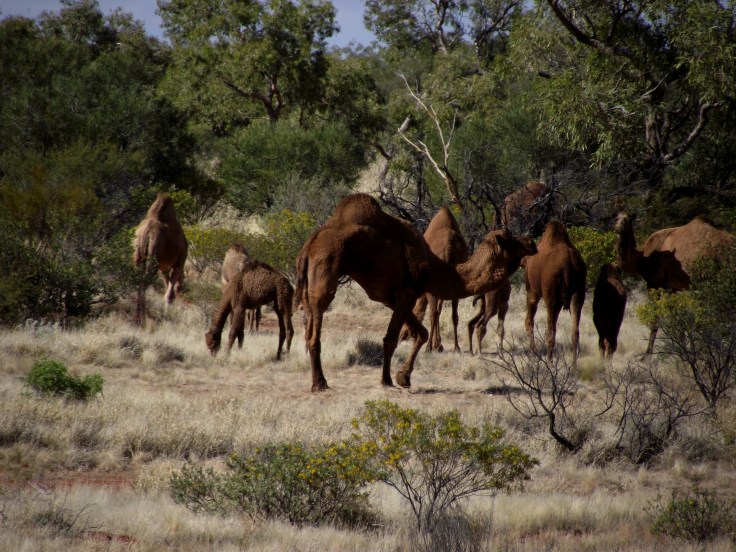
Be very careful when travelling these outback roads as we spotted lots of camels, alive and dead. They would certainly put a big dent in your bumper bar. Another tip, DO NOT travel at night. It is far to dangerous, with kangaroos, camels, cattle etc on the road, to be travelling in the dark. The biggest fatalities in the outback, after heat exhaustion and driver fatigue, is hitting large animals. The good thing, though, is you only need a standard car to get there. All the roads are sealed and in very good condition.
Yulara is the closest town to Ayers Rock ( approx 15 klm’s ) and was purpose built in the early 1980’s after it was found that tourists, camping, and several motels that were at the base of the rock were having detrimental effects on the environment. Yulara has many different types of accommodation ranging from resort style to apartments to budget to camping, which we did. There is a commercial centre with a supermarket, bank, post office, newsagent and many food outlets. The airport is just a few kilometres out of town and is serviced daily by Qantas, with flights from all major capital cities and Alice Springs.
We arrived in our trusty Toyota Prado, after driving for a week, from our home on the east coast of NSW, and stopping at Broken Hill, Port August and Coober Pedy along the way. Approximately 3000 klm’s. We booked into the Ayers Rock campground and set up our tent on the beautiful, green, and flat, well maintained camp sites. Make sure you peg your tent down securely as we had nearly cyclonic winds the first night. We were fine, but we could hear things being violently blown around for a few hours. It was also about 4 degrees celcius overnight, so take a good sleeping bag and winter woolies.


Ayers Rock is part of the Uluru-Kata Tjuta National Park, so you will need to purchase a 3 day pass at the entry station on your way into Uluru. This is $50 for 2 adults and also gives you access to The Olgas ( Kata Tjuta ). You will need at least 3 days to explore this stunningly beautiful area.
As we drove into the National Park, the rock loomed bigger and bigger as we approached. I must say, as we sat there looking up at this gigantic monolith, we were both left speechless, and I started to cry. I can’t explain why, but we were just totally in awe of what we saw. Words cannot describe the sheer beauty and size of this 348 mtr high rock.
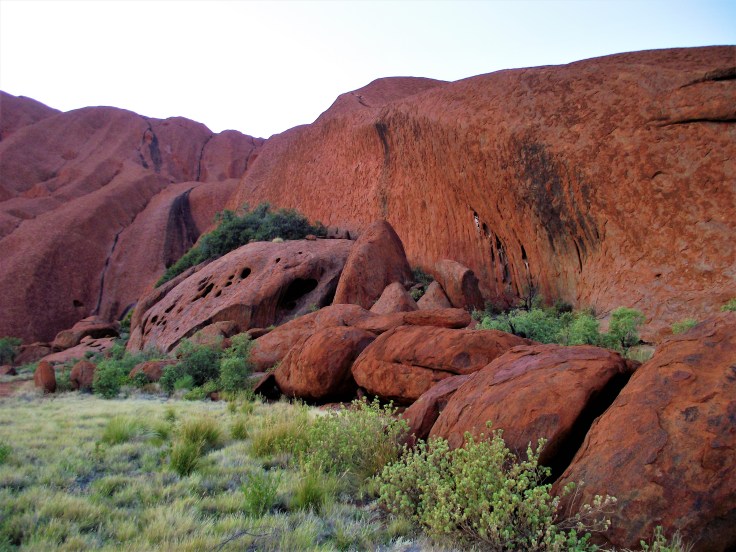
The base walk around Uluru is a 10 klm flat circular walk that will take about 3.5 to 4 hours. It was quite cold when we set out ( about 5 degrees celcius ) so we had jackets and scarves on, but as we walked and the sun came up, so did the temperature. ( It was about 30 degrees when we finished ) Make sure you layer your clothes, take a backpack and plenty of water.
It is a photographers dream, but be mindful of the signs at a few sacred sights where they ask you not to take photos. We travelled here in September and found the crowds to be quite sparse, so as we meandered around the rock, we felt like we were the only people there. The peace, tranquility and spiritual feel was like nothing we had ever encountered. Uluru is sacred to the indigenous Australians who live here. The Anangu own Uluru and Kata Tjuta and lease it back to Parks Australia. The rock art that you will find on Ayers Rock is believed to date back at least 5000 years.


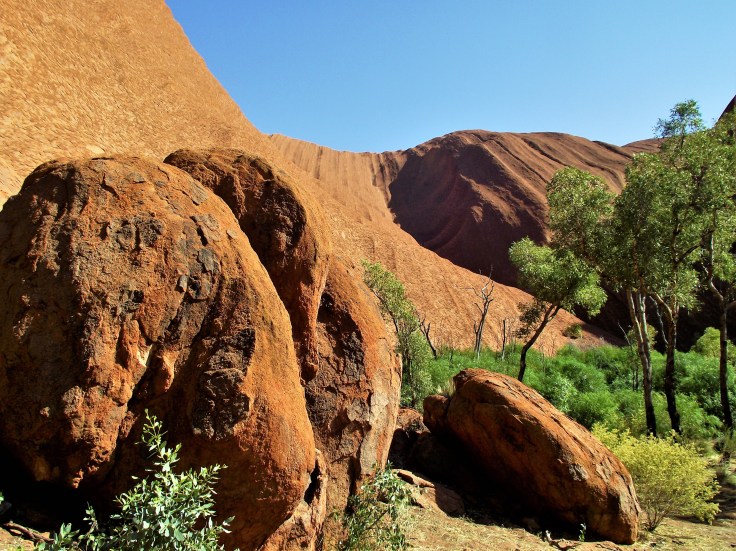
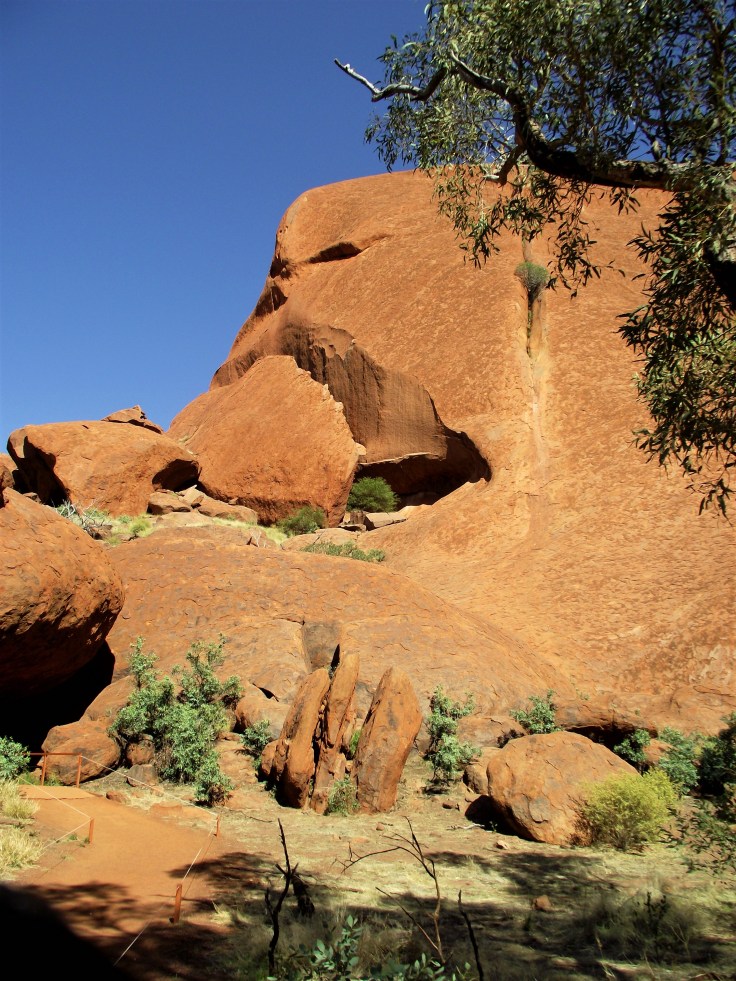
We were amazed at every turn, at how the rock changed it’s appearance. Rough and flaky cliffs to smooth wave walls that towered above us. The outline of a heart, like someone had pushed a stamp into soft clay, high up on a rock face, and waterfalls and rock pools. Our personal favourite was the rock formation that resembled face of The Phantom.


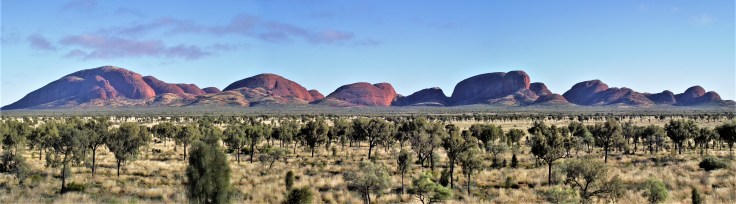
The next morning we headed out bright and early for the 53 klm drive to Kata Tjuta ( The Olgas). Where Uluru is made up of one giant rock ( monolith ), Kata Tjuta is 36 imposing dome rock formations, separated by magnificent gorges.
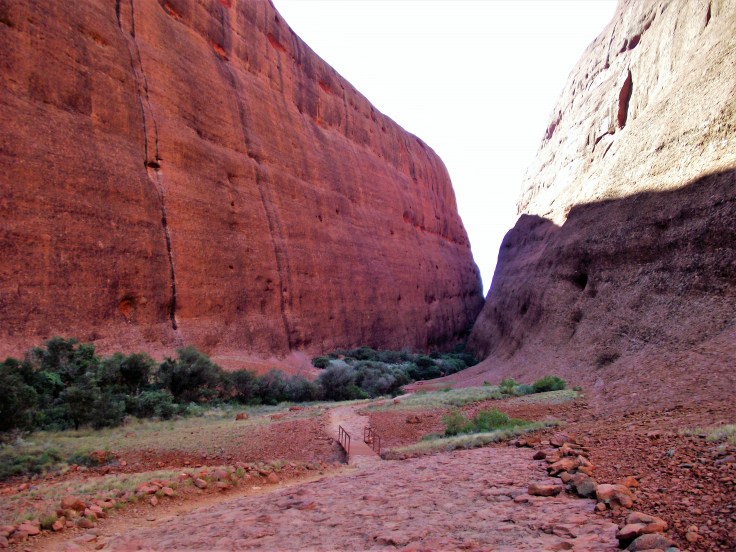
There are a number of walking trails that range from the easy 2.5 klm Walpa Gorge walk to the more strenuous 7 klm Valley of the Winds walk. Being by no means fit, but determined to see and experience as much as we can, we did both walks. From the car park at Walpa Gorge, it is a pretty easy hour long walk. The gorge is a funnel shape, wide at the front tapering back to a stream. It is also called Windy Gorge and we soon found out why. The further into the gorge you go, the stronger and louder the wind becomes. Tony had to scramble down to a pond, with a big stick, to retrieve his cap. The spectacular red and orange cliffs, soar up towards the blue sky, and protect the rare plants that grow here, from the hot desert sun.
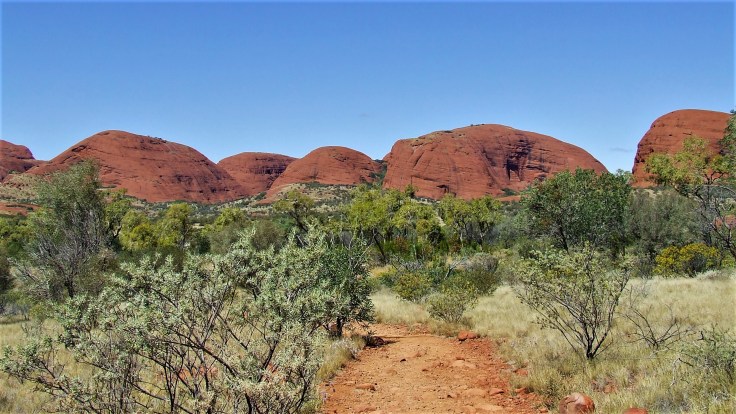
After loosening up our leg muscles on the gorge walk, we decided to tackle the more strenuous Valley of the Winds track. The track has lots of rocks and loose stones, so be sure to wear hiking boots or sturdy footwear. It also gets very hot, so a hat, water and sunscreen are a must, but the incredible scenery and views are breathtaking. It will take you about 4 to 5 hours to complete the circuit, if you stop to take photos and soak up the serenity. We were amazed at the flocks of Zebra Finches, fighting the gusts of wind and clinging to the branches of nearby trees. The best time to visit is early in the morning when the wildlife is in abundance, and the air is still crisp and cool.


Well we have gone from never really wanting to come to Uluru, to promising ourselves that we will definitely be back. And on reflection, 3 days is not enough.
 RED DIRT 2 COBBLESTONES
Leave a comment